

Home Sauna Trends 2026: Benefits, Science & Longevity Guide
At a Glance
- Over 57% of sauna units sold are now for residential use — the home sauna has become daily recovery infrastructure [1]
- Regular sauna use 4 to 7 times per week is linked to up to a 66% lower risk of dementia and significant reductions in cardiovascular mortality [2]
- Infrared saunas account for over 45% of home sales — lower temperatures, faster heat-up, and easier integration into daily routines [3]
- Traditional saunas carry a deeper cardiovascular research base; infrared offers more convenience and targeted tissue benefits
- Frequency matters more than session length — three 15-minute sessions outperform one 45-minute session for cumulative benefit
- The best sauna is the one you will actually use consistently — modality debates matter far less than the habit you build
Most people still picture a sauna as something you stumble into after a hotel swim, wrapped in a borrowed robe. That image is outdated. In 2026, the sauna has moved from spa amenity to serious recovery infrastructure — sitting alongside cold plunges and sleep trackers in the home wellness setups of health-conscious individuals.
Over half of sauna units sold are now purchased for residential use [1], and the science backing routine heat exposure has never been stronger. This article covers the market forces driving home sauna adoption, the health research you should know, how to choose the right modality, and how to use one safely.
The Sauna Boom in 2026: Market Data and Who's Buying
The numbers are hard to ignore. The global sauna market was valued at $101.91 billion in 2023, with an expected compound annual growth rate of 6.2% through 2030. That trajectory is being driven not by spas or gyms, but by homeowners who want daily access to heat therapy on their own terms.
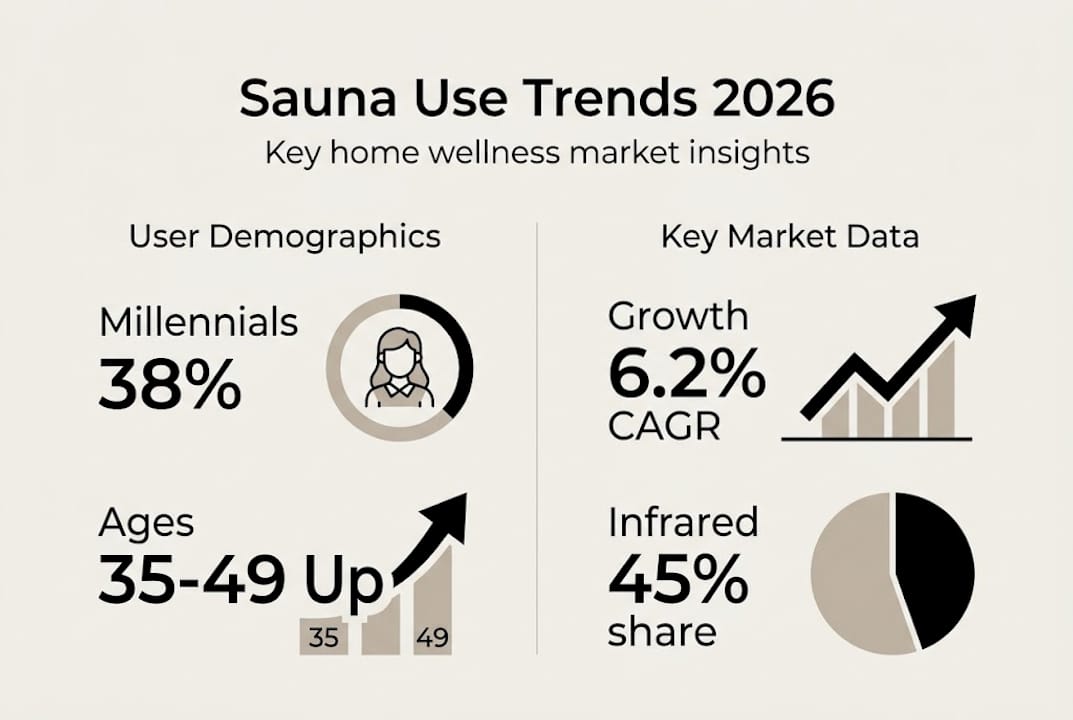
The demographic shift is equally striking. Millennials now make up 38% of the boutique infrared sauna market, and the average age of a first-time home sauna buyer has dropped to 39. These are not retirees treating a sore back once a week — they are active, health-focused individuals building recovery habits around their training and work schedules.
| Metric | Figure |
|---|---|
| Global market value (2023) | $101.91 billion |
| Expected CAGR to 2030 | 6.2% |
| Share of residential sauna sales | 57% |
| Millennials in infrared market | 38% |
| Average first-time buyer age | 39 years old |
| High-income US households planning home spa | 30% |
Another major trend shaping the market is integration. Buyers are no longer purchasing a sauna in isolation — they are pairing it with cold plunges, red light therapy panels, and home gym suites to create layered recovery environments. You can explore the latest home sauna trends to see how even small apartments are being adapted for this purpose.
According to 2026 wellness trends, consumers are prioritizing recovery and longevity investments at home rather than relying on gym memberships or spa visits [4]. The sauna has become what the standing desk was a decade ago: a functional wellness tool that signals a serious commitment to long-term health.
- Increased awareness of heat therapy's role in cardiovascular and cognitive health
- Rising costs and inconvenience of commercial spa access
- Compact infrared models that fit apartments and small spaces
- Growing culture of pairing heat with cold contrast therapy
- Shift from viewing saunas as luxury to viewing them as daily recovery tools
Science-Backed Health Benefits of Regular Sauna Use
Finnish and Harvard-led studies have tracked sauna users for decades, and the findings are striking enough to change how clinicians think about non-pharmacological health interventions.
The biological mechanisms behind these outcomes are well understood. Heat exposure triggers the production of heat shock proteins — a cellular repair crew that helps damaged proteins refold and protects cells from stress. Your cardiovascular system responds to sauna heat in ways that closely mimic moderate aerobic exercise: heart rate rises, blood vessels dilate, and circulation improves. These effects, repeated consistently, build resilience over time.
- Reduced all-cause and cardiovascular mortality with frequent use
- Lower risk of dementia and cognitive decline
- Improved circulation and vascular flexibility
- Muscle recovery acceleration through increased blood flow
- Stress hormone (cortisol) reduction after sessions
- Better sleep and stress recovery when used consistently
The benefits are dose-dependent. Occasional use offers some reward, but the most significant longevity outcomes appear in people who treat sauna like brushing their teeth — a non-negotiable daily or near-daily practice.
Infrared vs Traditional: Comparing Modalities
The debate between infrared and traditional saunas is one of the most common questions in the home wellness space. The answer depends more on your lifestyle than on any universal ranking.
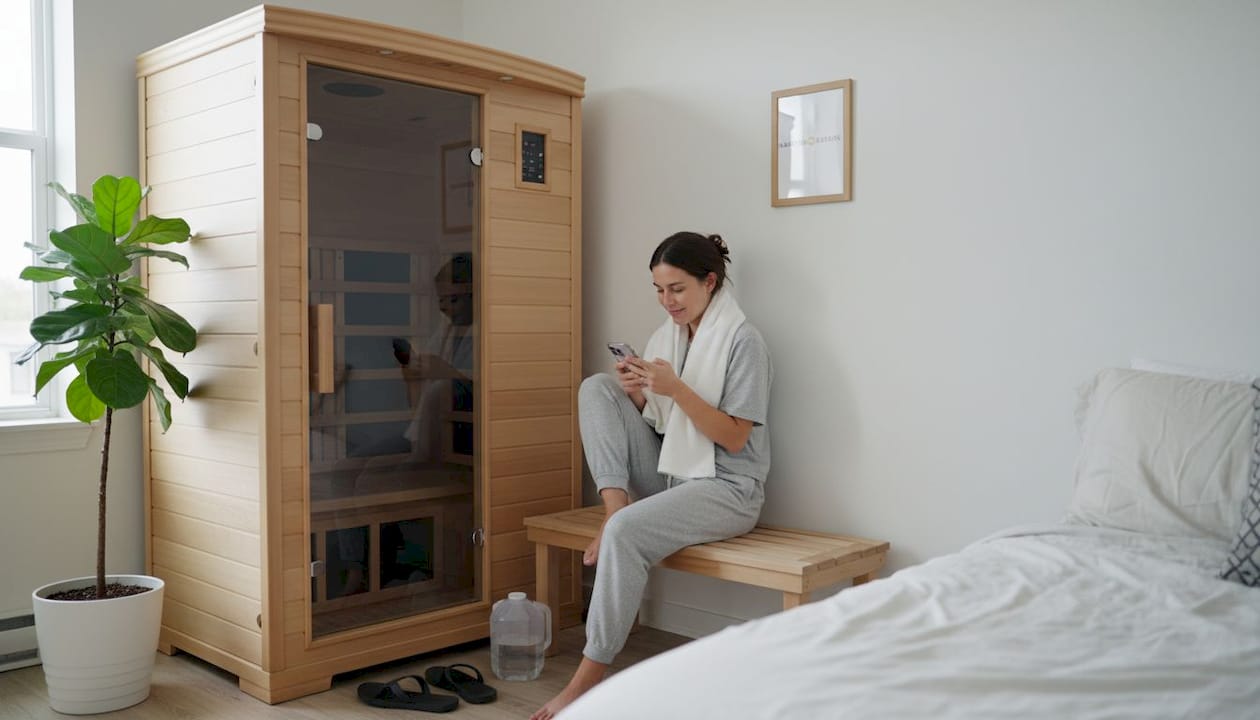
Infrared saunas account for over 45% of home sauna sales [3], and their dominance in the residential market makes sense. They operate at lower temperatures (typically 120 to 150°F), consume less energy, and heat up in under 15 minutes. For someone fitting a session into a busy morning routine, that convenience is decisive. Infrared models are also better suited for pain relief, skin health, and longer sessions.
Traditional Finnish saunas operate at higher temperatures (160 to 200°F) and use steam (löyly) to intensify the experience. The research base for traditional saunas is deeper, and the cardiovascular outcomes documented in Finnish population studies were measured using this modality. If maximizing heart health outcomes is your primary goal, the traditional model has an evidence edge.
| Feature | Infrared | Traditional |
|---|---|---|
| Operating temperature | 120 to 150°F | 160 to 200°F |
| Heat-up time | 10 to 15 minutes | 30 to 45 minutes |
| Energy use | Lower | Higher |
| Best for | Pain, skin, convenience | Cardiovascular, deep sweat |
| Home suitability | Excellent | Good (needs ventilation) |
| Research depth | Growing | Extensive |
Both modalities activate heat shock proteins and produce meaningful cardiovascular and recovery benefits. The science of infrared heat shows that near, mid, and far infrared wavelengths penetrate tissue differently, offering targeted benefits that traditional heat cannot replicate. Some premium units — like those featuring infrared and steam combined — give you both modalities in one unit.
Safety First: Contraindications and Smart Use
Most healthy adults tolerate sauna use well, but there are specific conditions where heat exposure carries real risk. Knowing the difference between absolute and relative contraindications helps you make informed decisions.
Do Not Use Without Medical Clearance
Unstable angina or recent heart attack · Active fever or acute infection · Alcohol consumption before or during a session · Pregnancy · Implanted pacemakers or certain cardiac devices
Use With Caution and Physician Guidance
Controlled hypertension or heart disease · Certain medications (diuretics, beta-blockers, sedatives) · Recent surgery or open wounds · Severe skin conditions · Children under 12 and adults over 65
Signs to Exit Immediately
Dizziness or lightheadedness · Nausea · Shortness of breath · Chest discomfort · Any sensation of overheating beyond normal discomfort
For New Users
Begin with 10 to 15 minute sessions and increase gradually over weeks. Never use alone when you are new to heat therapy. Cool down gradually after exiting.
- Hydrate before, during, and after every session
- Start with 10 to 15 minute sessions and increase gradually over weeks
- Exit immediately if you feel dizzy, nauseous, or short of breath
- Avoid eating a heavy meal within 1 to 2 hours before your session
- Cool down gradually after exiting, especially in colder months
- Never use a sauna alone if you are new to heat therapy
For a full overview of smart sauna practices, see the most asked sauna questions answered by science.
Why the Best Sauna Is the One You'll Use Consistently
The wellness community in 2026 is still caught up in modality debates: infrared versus traditional, near versus far, Finnish versus American. Meanwhile, the people seeing the most meaningful health gains are the ones who simply show up — session after session — regardless of which unit they own.
The research is clear that both infrared and traditional saunas are effective when used consistently. The longevity benefits documented in population studies did not come from people who used the "optimal" sauna type. They came from people who made heat exposure a regular part of their lives.
The individuals who invest in a unit that fits their space, matches their comfort preferences, and integrates naturally into their existing longevity protocols are the ones who actually use it. The "perfect" sauna sitting unused in a garage delivers zero benefit. A modest infrared unit used five times a week delivers compounding returns over months and years.
Choose the sauna that fits your life — not the one that wins a spec sheet comparison.
If you are just getting started, the Finnmark FD-1 single-person infrared sauna is an excellent entry point — full-spectrum infrared in a space-efficient design. For those ready to build a complete contrast therapy setup, the home sauna and cold plunge bundle pairs heat and cold for maximum recovery impact. Round out your setup with essential sauna accessories that make every session more comfortable and effective.
FAQ: Home Sauna Use in 2026
How often should you use a sauna for the best health results?
Research suggests 4 to 7 sessions per week yields the greatest longevity and cardiovascular benefits. Even 3 sessions per week delivers meaningful improvements over occasional use. Frequency matters more than duration — short, consistent sessions outperform infrequent long ones.
Is infrared or traditional sauna better for home use in 2026?
Infrared saunas dominate the home market for their practicality, lower energy demands, and faster heat-up time. Traditional models carry a stronger cardiovascular research base. Both support wellness when used routinely — the better choice is whichever one you will actually use consistently.
Who should avoid sauna use?
People with unstable heart conditions, recent heart attack, active infection, or those who are pregnant should avoid saunas without explicit medical clearance. Always check with your physician if you are on cardiac medications, diuretics, or sedatives.
Can sauna help with stress or sleep?
Regular sauna use supports stress reduction and sleep quality, particularly when incorporated into a consistent evening or post-workout recovery routine. The cortisol-lowering effects build with frequency over weeks of consistent use.
What is the best home sauna for small spaces?
Compact infrared units are the most practical option for apartments and small rooms. They require no special ventilation, heat up in under 15 minutes, and deliver full therapeutic benefit in a single-person footprint. See the home sauna guide for small spaces for specific recommendations.
How does sauna pair with cold plunge for contrast therapy?
Alternating heat and cold — typically sauna followed by cold plunge — drives a vasoconstriction-vasodilation cycle that amplifies both cardiovascular and recovery benefits beyond either modality alone. The sauna and cold plunge bundle is purpose-built for exactly this protocol.
Find Your Home Sauna
From compact single-person infrared units to full contrast therapy bundles — browse the collection and find the setup that fits your space and routine.
Sources
- WiFi Talents, 2025. Sauna wellness industry statistics: residential market share and growth data. wifitalents.com
- NPR, 2026. Regular sauna use and dementia risk: Finnish population study findings. npr.org
- GQ, 2026. Infrared vs traditional sauna: home market share and modality comparison. gq.com
- Vogue, 2026. 2026 wellness trends: recovery, longevity, and home health investment. vogue.com
This article is for informational purposes only and does not constitute medical advice. Always consult a qualified healthcare provider before beginning any new health practice, particularly if you have a pre-existing condition, are pregnant, or are currently taking medication.